
Experimental System J1 Prague
Where there's a will, there's a way. Without regard for losses, there's even more.

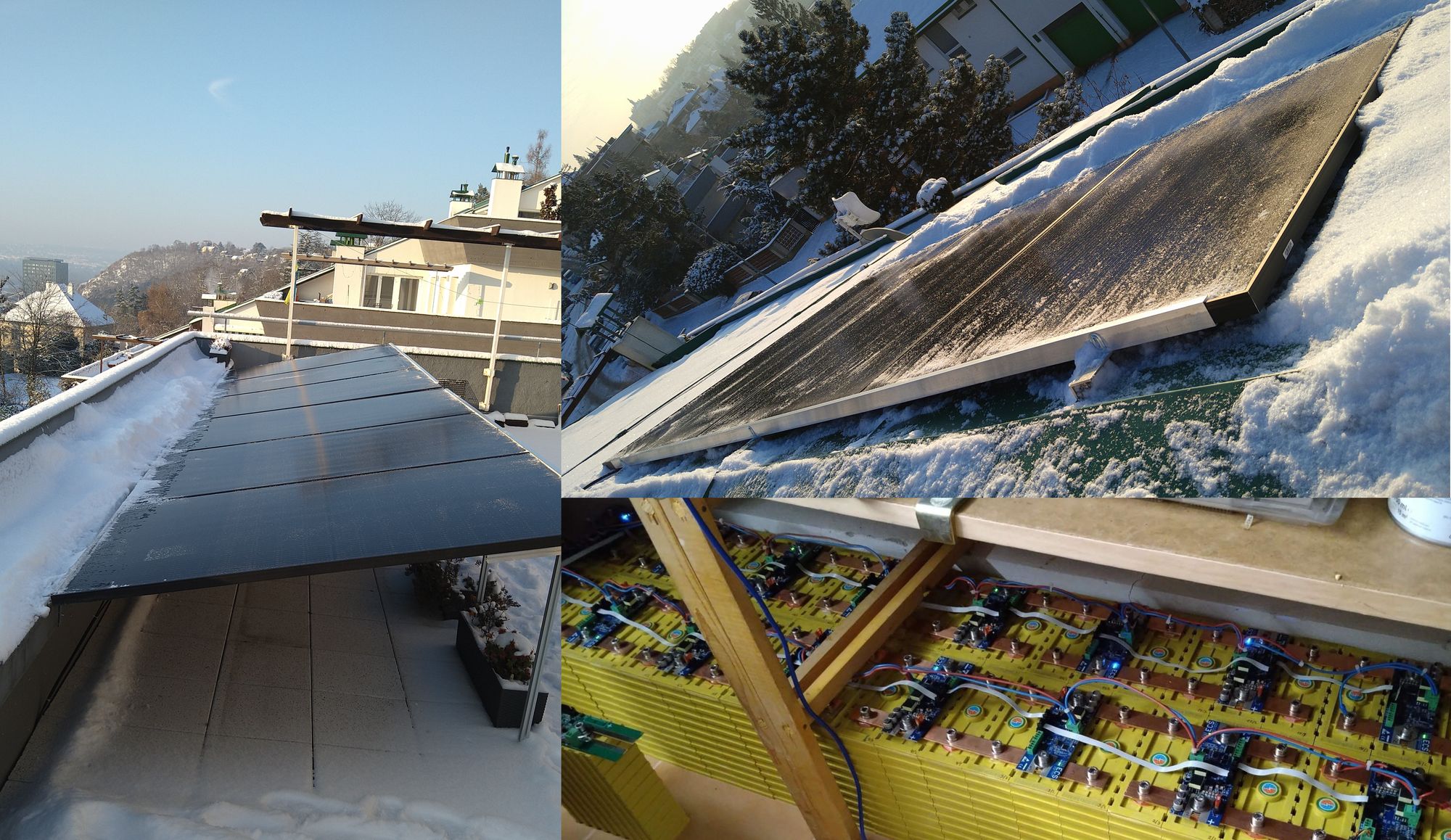
| System at a Glance | |
| Construction start | 2014 |
| PV generators | 2 units (2280, 1140)Wp |
| PV capacity | 3420Wp (9 x 380Wp) |
| Storage capacity | 22.2kWh (15.3kWh + 4.6kWh + 2.3kWh) |
| System type | DC/AC Hybrid, black start, single-phase |
Organically Grown
A PetaJoule installation with an experimental character stands in Prague. To be precise, the oldest PetaJoule installation of them all. Since 2014, this system has been used to test various concepts and gather long-term experience. It all began rather provisionally in May 2014 - with the test of a micro-inverter on a Winaico 260Wp module.
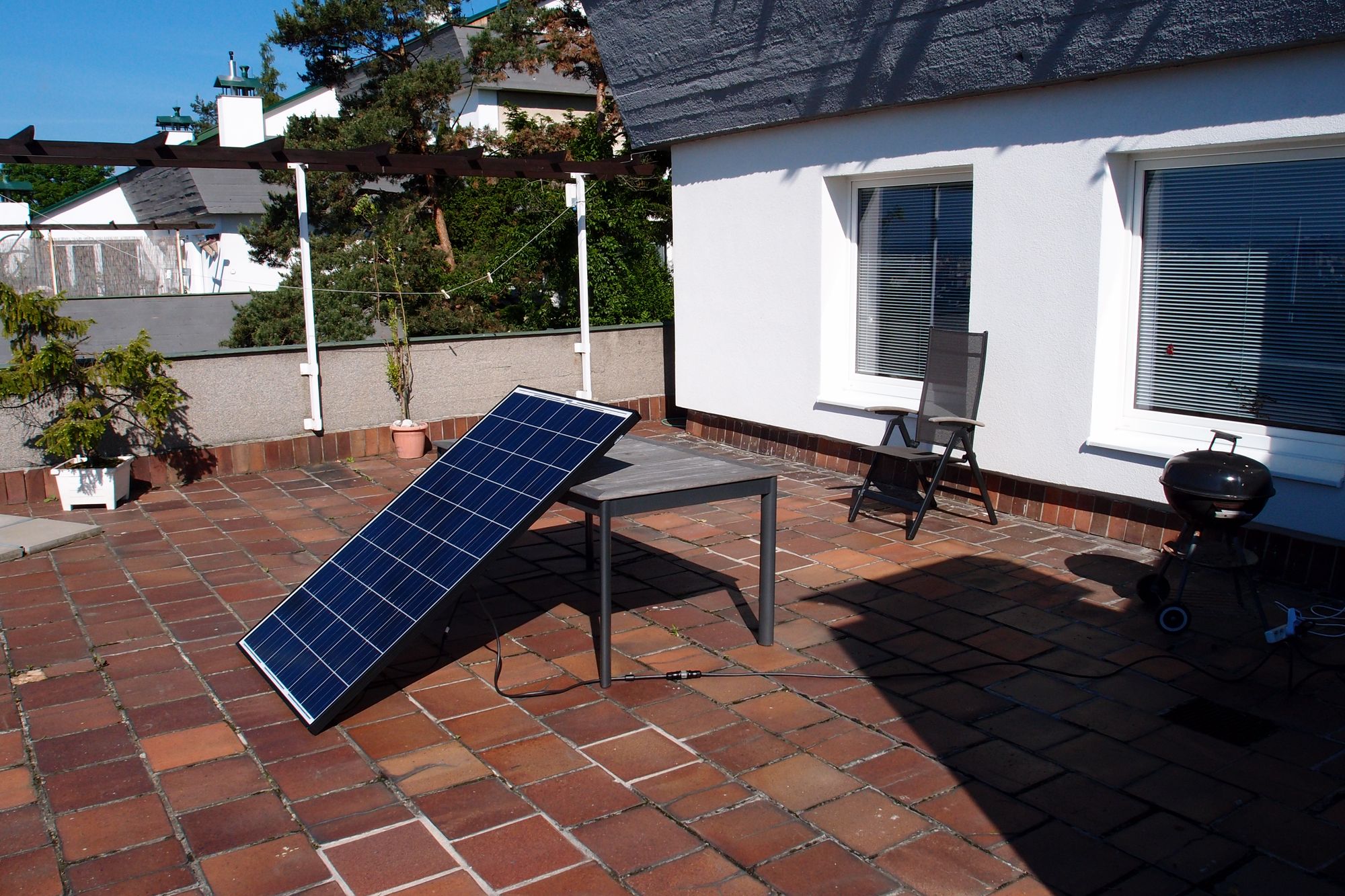
After extensive testing in July 2014 to determine whether such a micro-inverter could also work as an AC branch in a Victron Microgrid (yes - it works)...
...a first PnP PP (Plug-and-Play Power Plant) prototype was commissioned in August 2014. Here, a Victron MPPT was connected downstream of the PV modules, charging a 24V LFP battery, with the micro-inverter only being fed from this battery:
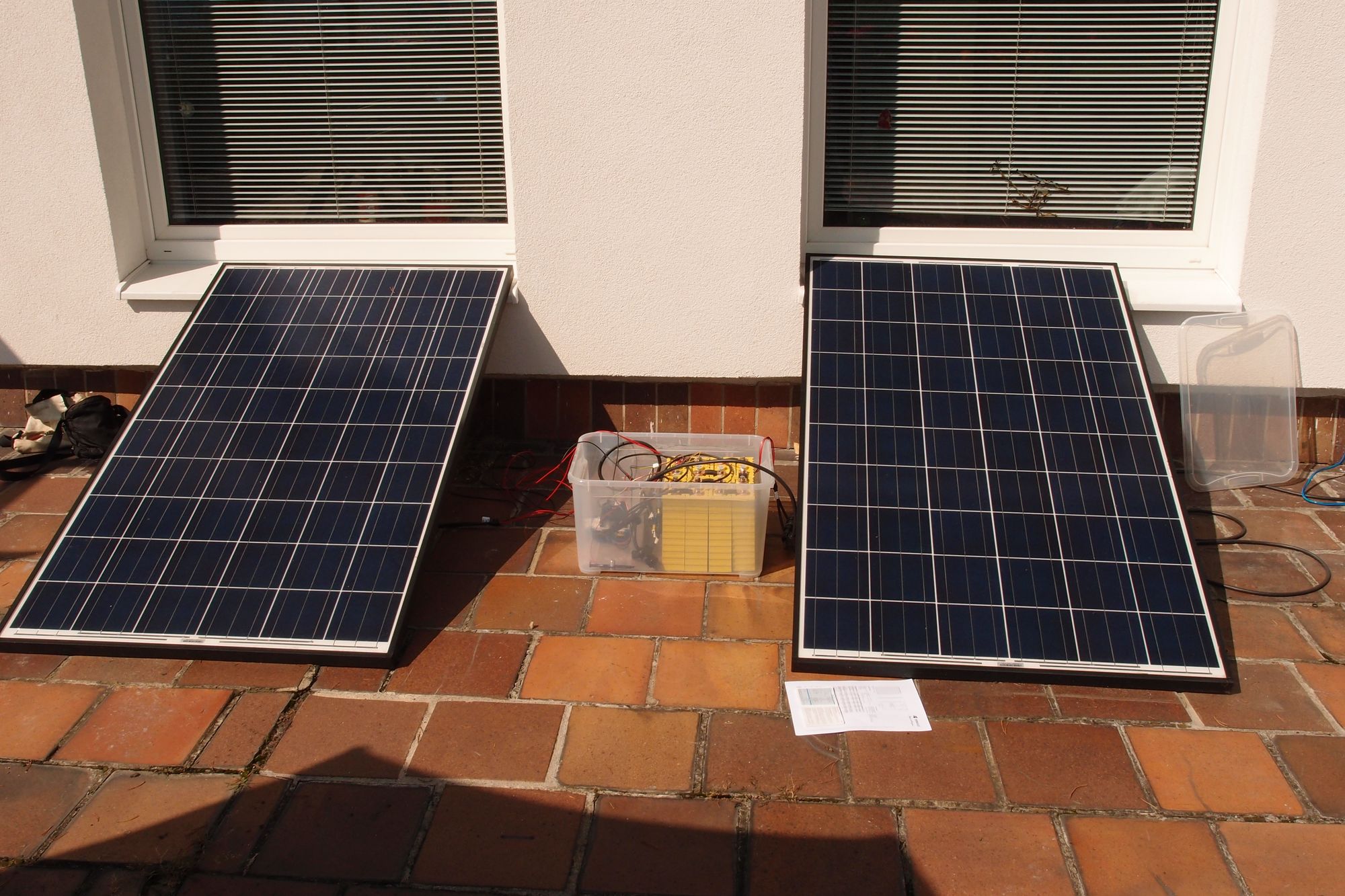
The cells were indeed hidden in a "proper" box under a PV panel, but deliberately left without a BMS for 3 years to fend for themselves in all weather conditions. After 2 years, the plastic box was already EOL:

The cells were fundamentally okay, but not as well balanced as one would wish. A year later - in September 2017 - came the first major modification. Due to cable works in the street, a (presumably) day-long power outage was expected.
Of course, PetaJoule had gathered plenty of experience from other tests, but now the moment seemed to have arrived to move the equipment from laboratory conditions into real daily operation.
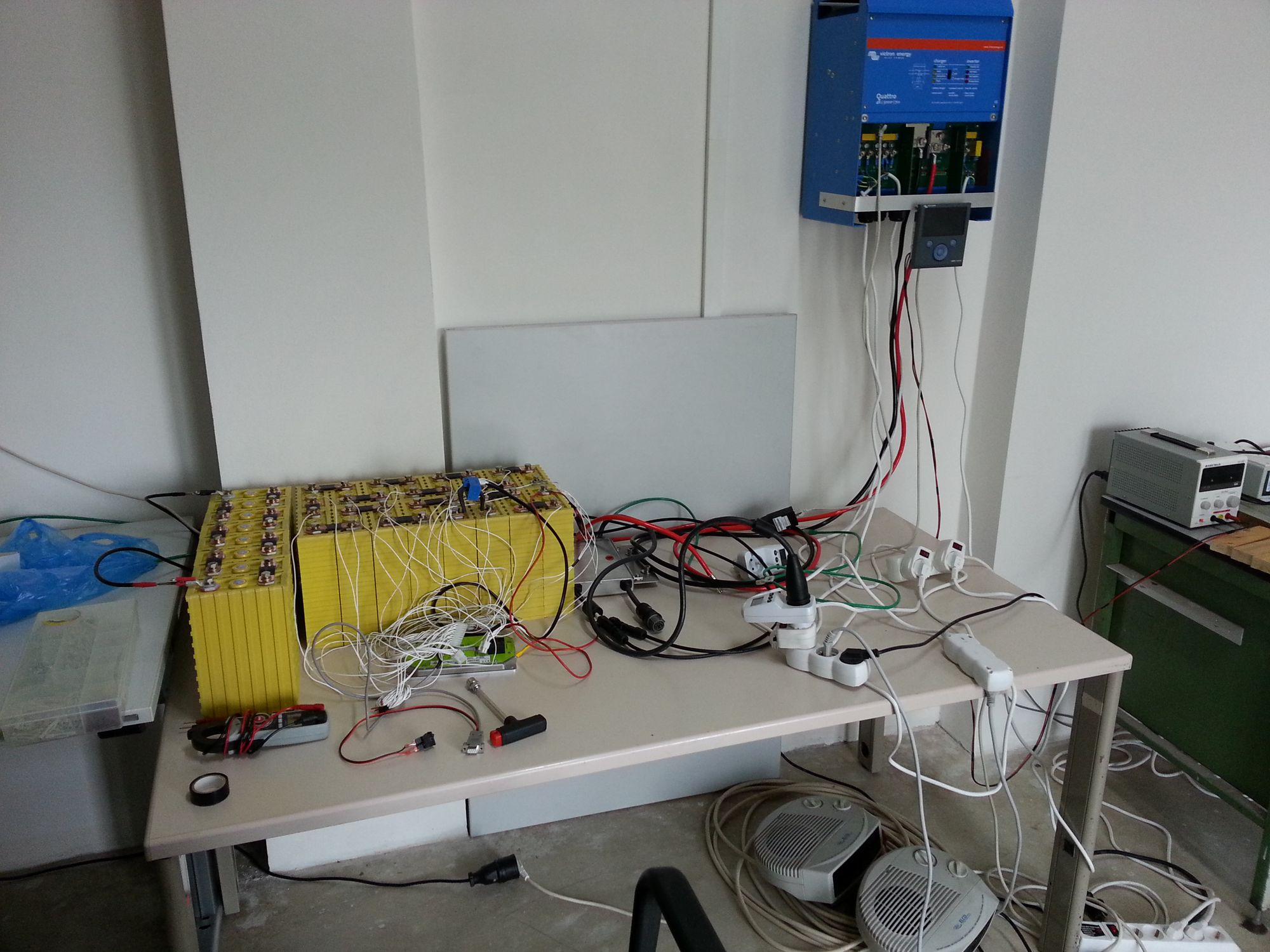
Therefore - in a rush within a single day - a provisional microgrid was set up for the household with a Victron Quattro 48V/5kVA and a 4.6kWh LFP battery. The wiring was truly spectacular:
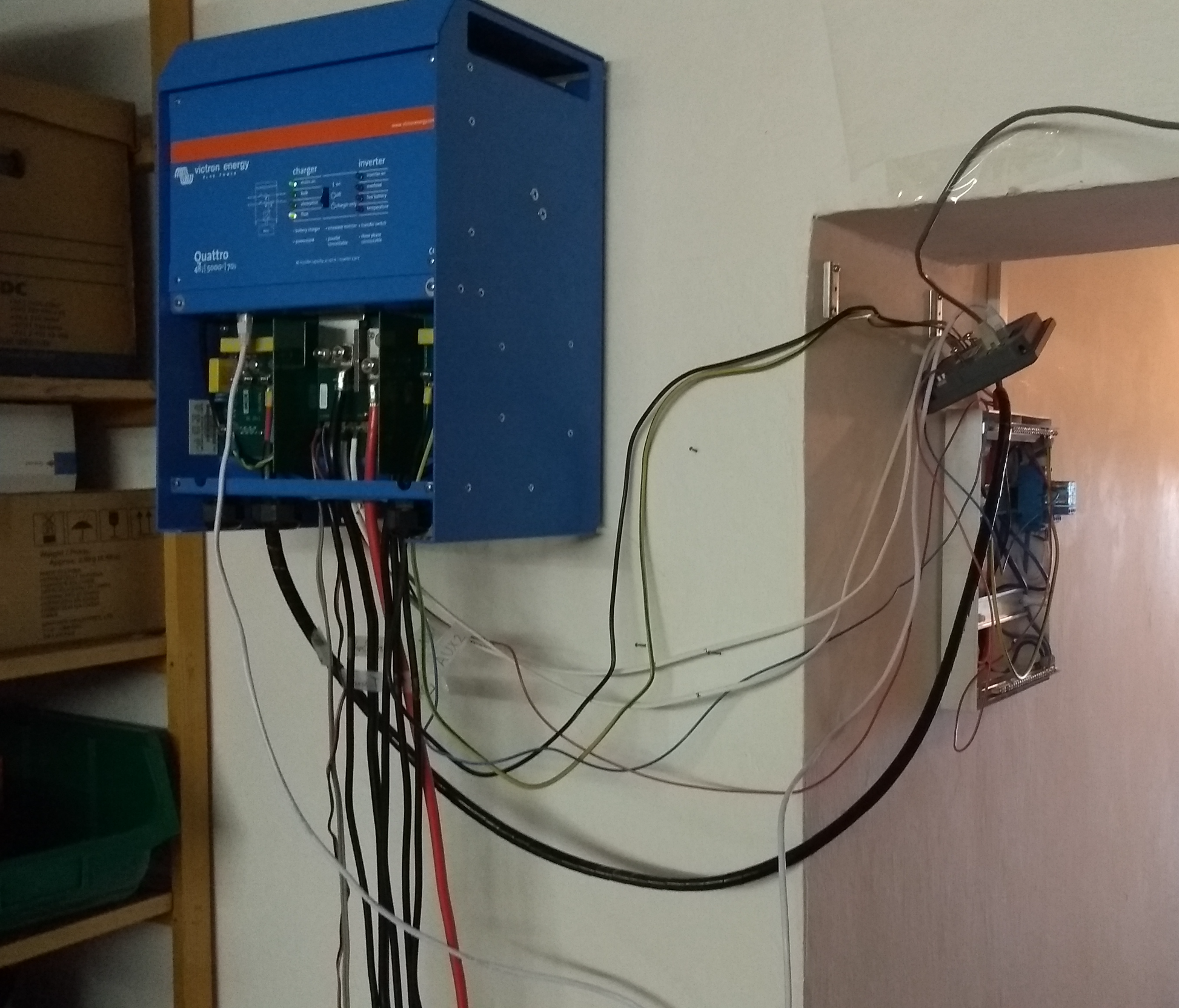
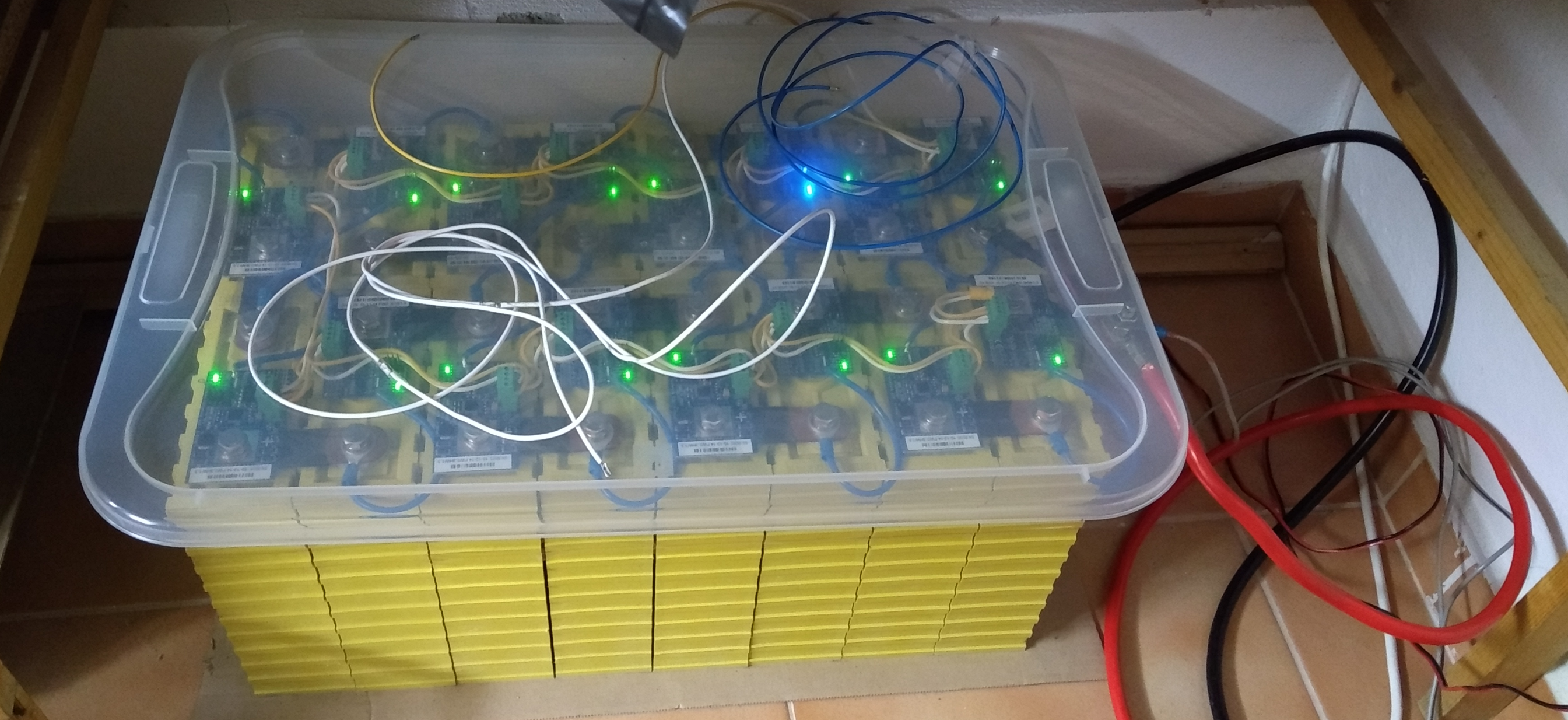
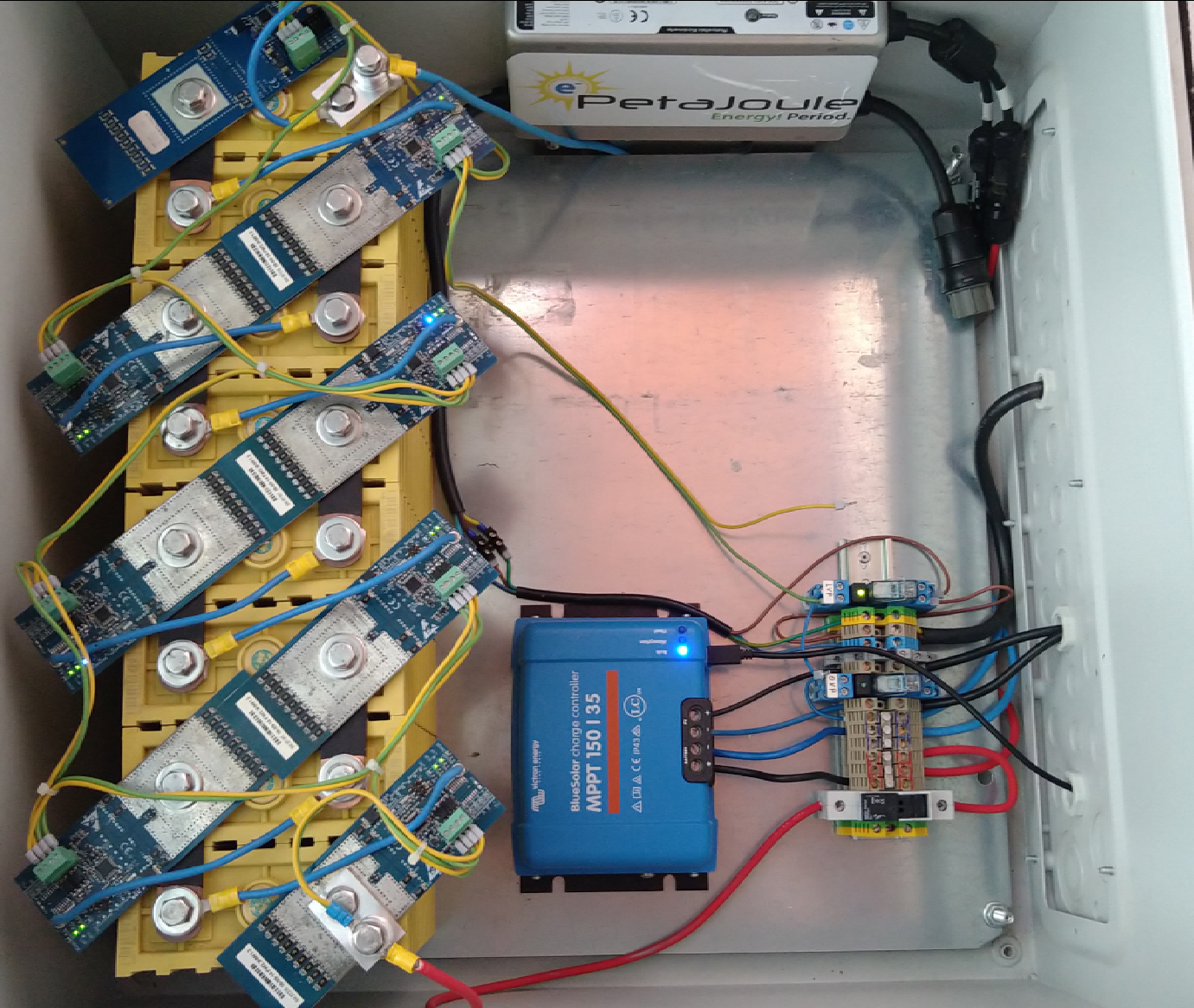
Shortly afterwards, the PV modules of the "AC branch" were finally mounted on the hot metal roof using Schletter seam clamps, the 24V battery also received its BMS, and together with the micro-inverter and Victron MPPT was moved into a sturdy Rittal metal enclosure:
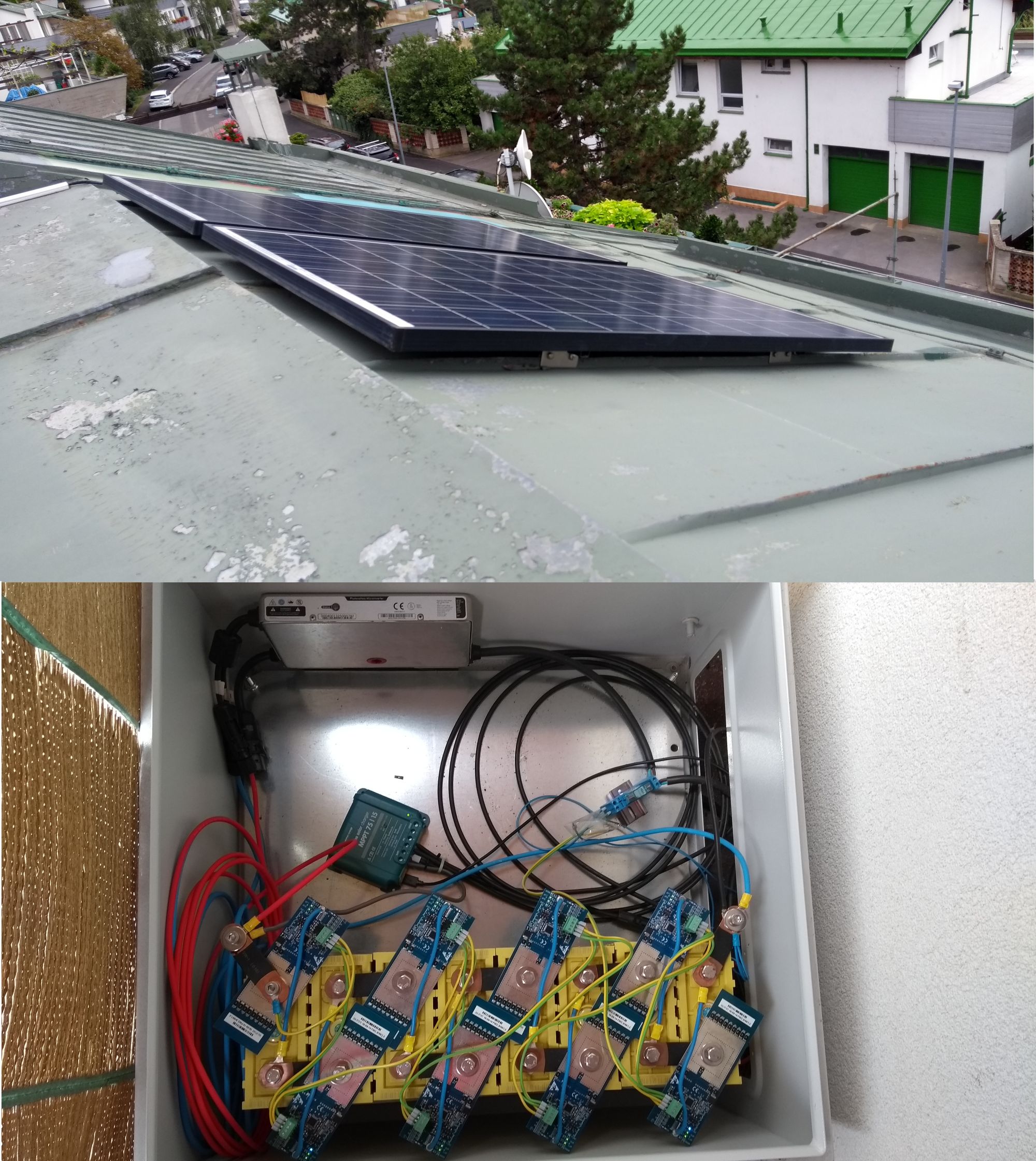
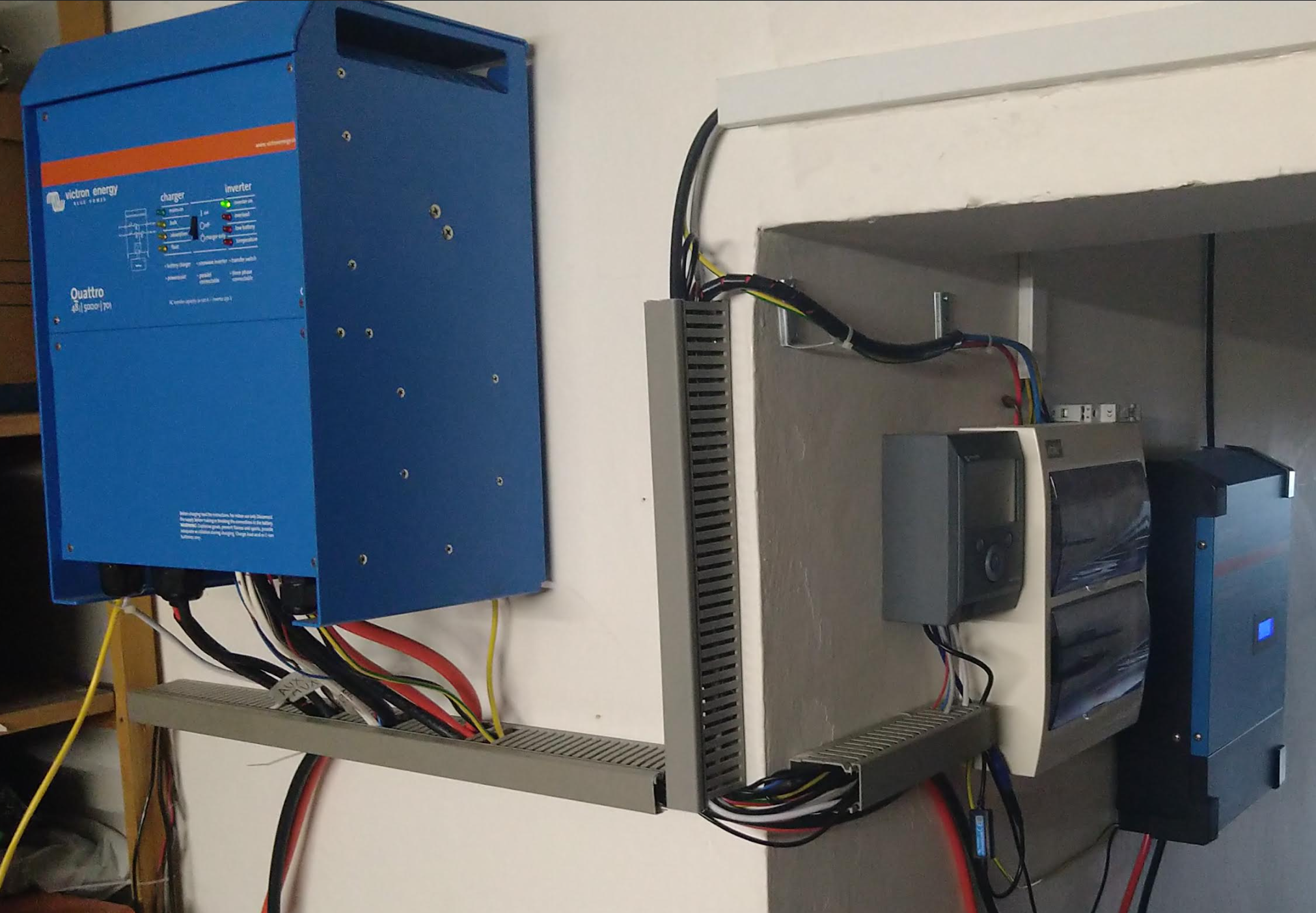
The wiring and electrical installation received some care over time, otherwise the system ran unchanged (but not without incidents) until March 2022. In the wake of rising energy costs and the desire for greater energy self-sufficiency - see Ukraine - the system was significantly expanded in March/April 2022:
- AC branch was "upgraded" from 2 x 260Wp to 3 x 380Wp
- A DC branch with 6 x 380Wp on an MPPT RS 450/100 was added
- 15.3kWh additional battery capacity (total 22.2kWh)
- A Honda Generator EU 32i was procured
Experimental, but Significant
The system has retained its experimental character to this day, but through this expansion has become a significant factor in the household's energy supply and energy security.
| Comparison | Before | After |
| Backup time | up to 10h | ~48h (battery), 1 week (generator) |
| PV capacity | 520Wp | 3420Wp |
| Black-start capable | no | yes |
| SoC precision | 1% | 0.1% (SmartShunt) |
The household has an annual consumption of approximately 6MWh. Previously, ~0.5MWh (8%) was covered by the micro-inverter. The new system covers 50% of annual consumption. It's important to bear in mind that all this is happening in a rented flat in a supposedly listed(*) building - there's not much more you can do at this location.
(*) "The roof must stay green" - according to the "heritage conservationists".
Generator: The Unloved Black Sheep
It's loud, expensive, uneconomical, and it stinks. Nevertheless, the petrol generator is an important component of this installation when it comes to self-sufficiency. Thanks to the capabilities that the Victron Quattros offer, it can even realise its maximum potential.
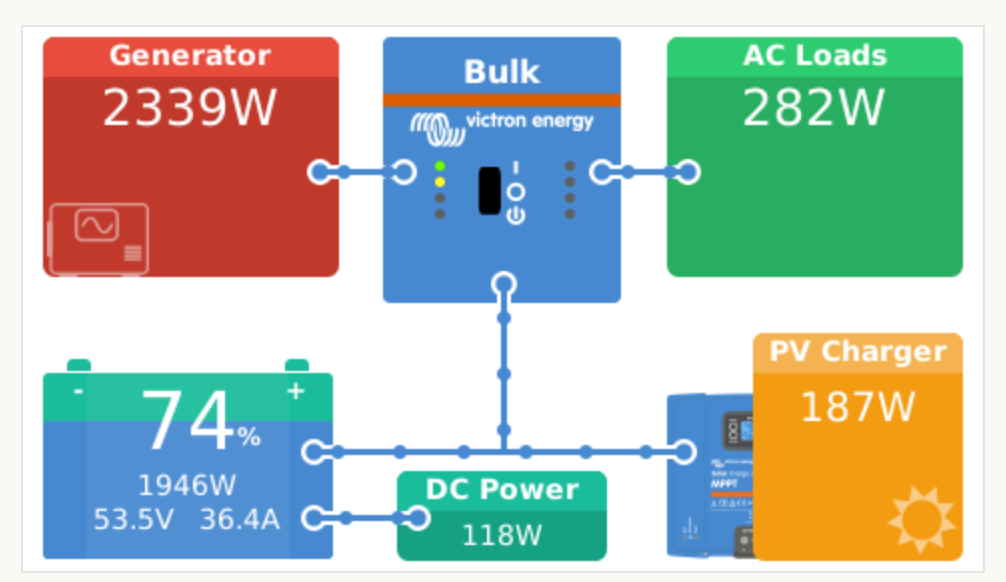
An emergency generator really is the last straw you clutch at when power is otherwise unavailable. Temporary food stalls at lakeside beaches and fairgrounds often use this solution for direct consumption: Generator -> Consumer.
This is problematic. Without demand, the generator runs idle. When power is needed, it throttles up and down. The result: It rarely operates in its optimal load range.
However, when combined with a Victron Quattro, several advantages emerge:
- The generator can run constantly in an optimal load range, because whatever isn't consumed directly goes into the battery. Fuel efficiency is maximised, and wear on the unit (constant RPM) is minimised.
- Overload problems are eliminated thanks to the Victron's "Power Assist". Here, the Victron adds energy from the battery when (peak) load exceeds generator capacity.
- A sudden generator failure doesn't cause a power outage for consumers (UPS feature).
- Time independence. You can naturally run the generator during the day and operate from battery at night - after all, a battery doesn't treat the neighbours to 90 decibels.
Nevertheless, not everything is rosy - there are conversion losses. For example, the generator app says 2470W are being drawn, Victron claims 2340W arrive at its end. The SmartShunt says 2100W go into the battery. In other words, 15% loss on the path from generator to battery.
The production costs are also nothing to sneeze at. With a petrol price of €1.65/l, the cost per kWh comes to 60 cents - not even factoring in generator amortisation! This means a generator remains something for absolute emergencies, provided you've stockpiled enough fuel. On the other hand, a power outage on a cold December night with an empty battery isn't exactly fun either.
Current Status
As of mid-2023, the system has been in regular operation in its new configuration with a few optimisations since September 2022.
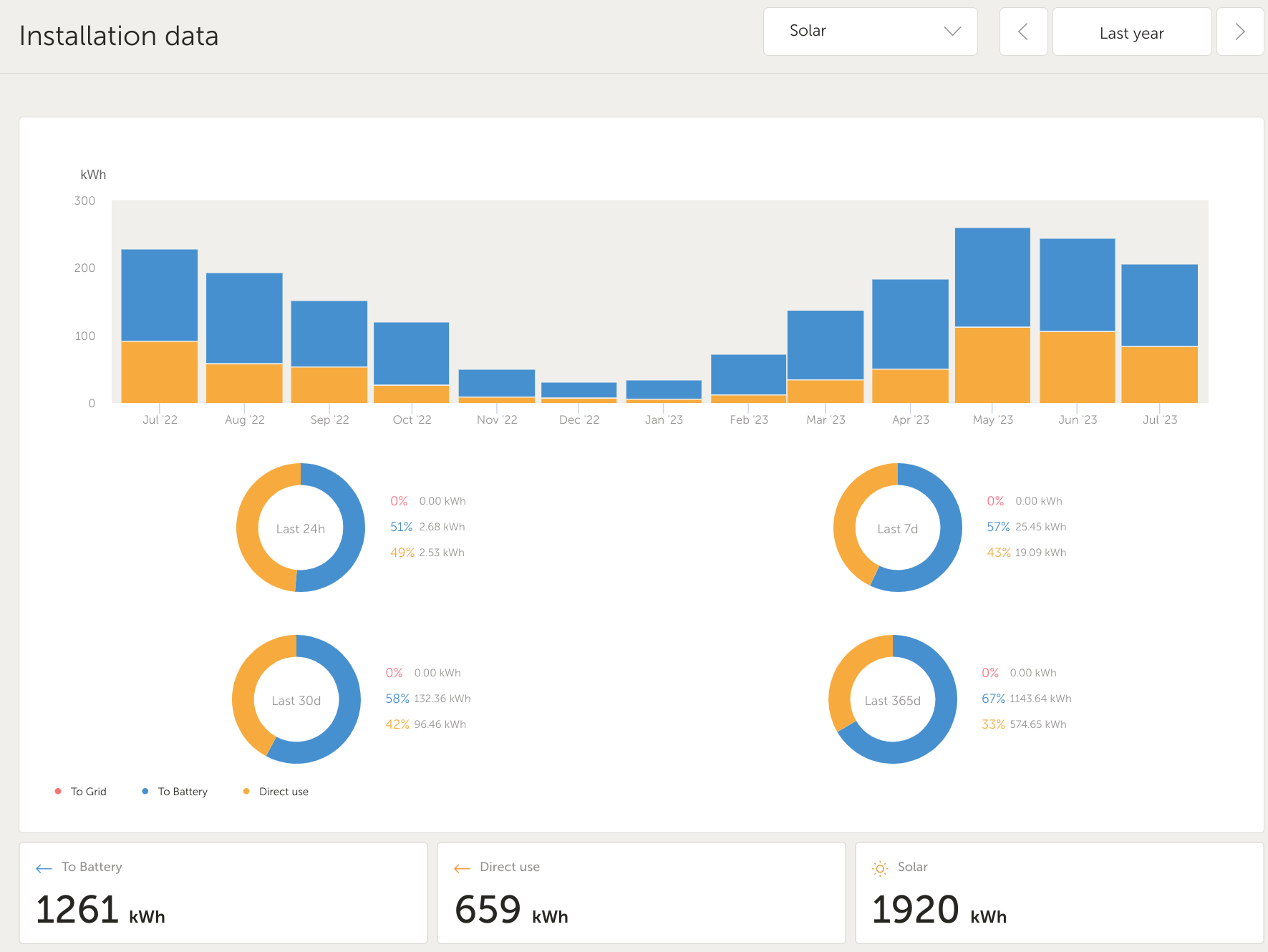
Since the system doesn't feed into the grid, the relatively high battery capacity compared to the PV generator makes a positive difference. Most of the surplus goes into the battery to cover evening/night power needs. The image above shows the balance for the DC branch; the AC branch is equivalent at 50% capacity.
Thus, with an annual requirement of 6MWh, approximately 3MWh is covered by the system and the other 3MWh is drawn from the grid. Calculated over the year, this means CO₂ savings of 2.4t and financial savings of approximately €800.
During this time, there were two power outages (25.2.2023 and 1.3.2023). One of them, due to a fault at the substation, knocked out the entire district for nearly 2.5 hours - including tram operations. Both outages were bridged effortlessly - in fact, they weren't even noticed.
5.9.2023 - A Small Final Update
The well-functioning but nearly 10-year-old Involar micro-inverter was replaced in August 2023 by a Hoymiles 350 micro-inverter.
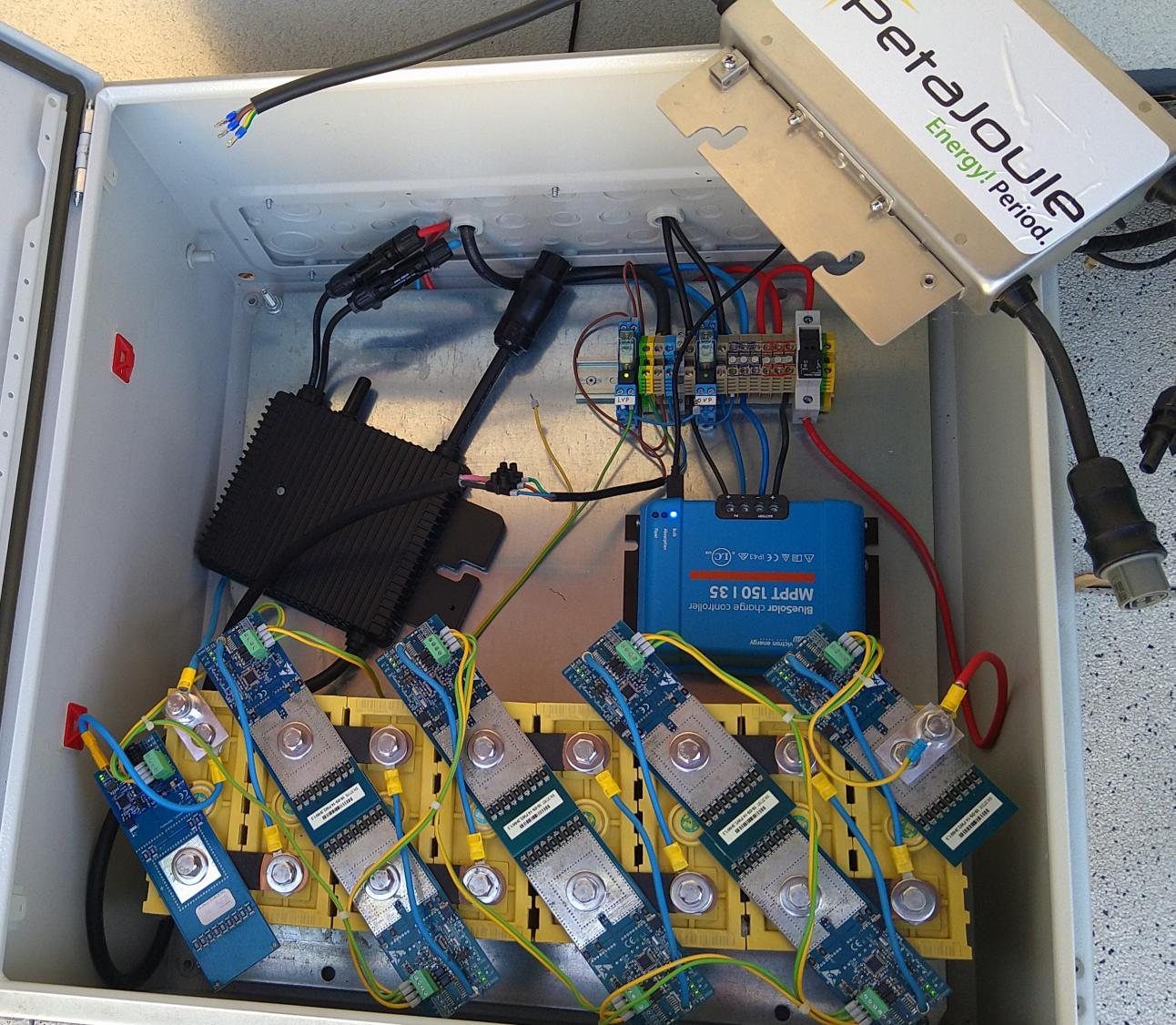
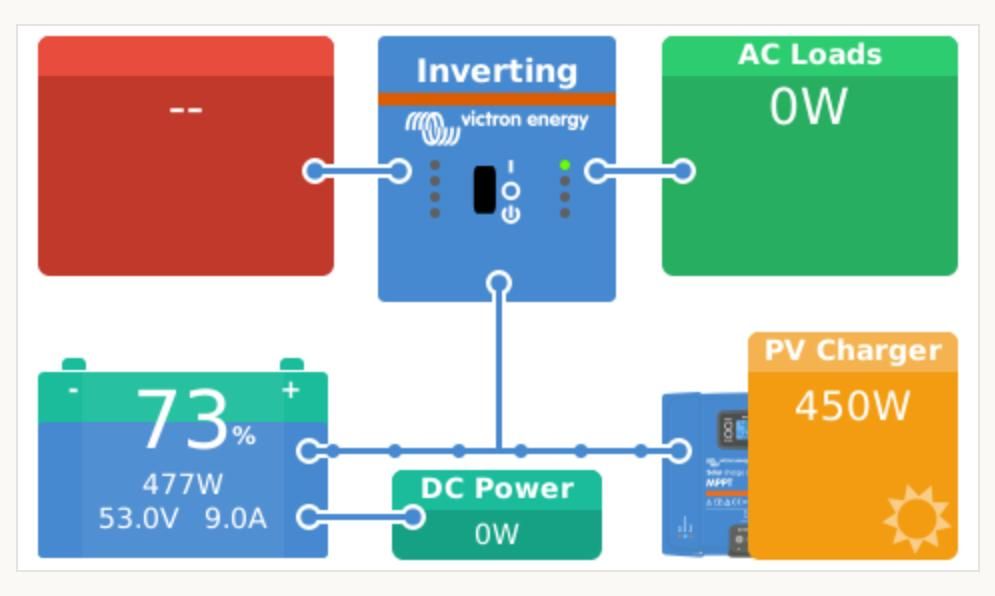
Initially, the Hoymiles was a bit shy in the Victron Microgrid, but it has since settled in nicely. Since the Hoymiles output power of 350W (at the battery it delivers up to 370W) corresponds quite precisely to the household's base load, an interesting situation now arises where the Victron often only provides the microgrid but needs to deliver 0W of power:
Demonstrator
The system serves as a demonstrator for hands-on training and customer consultations, and can accordingly be visited and "tried out".