
What Energy Management Actually Requires

Part 3 of the Smart Home Energy Management series. ← Previous: The Landscape
Beyond Automation: True Energy Intelligence
In the previous article, we surveyed the smart home landscape and identified a common gap: existing platforms treat energy management as an add-on, not a core function. But what would a system designed from the ground up for energy management actually need to do?
Let's define the requirements.
1. Forecasting: Know Tomorrow Today
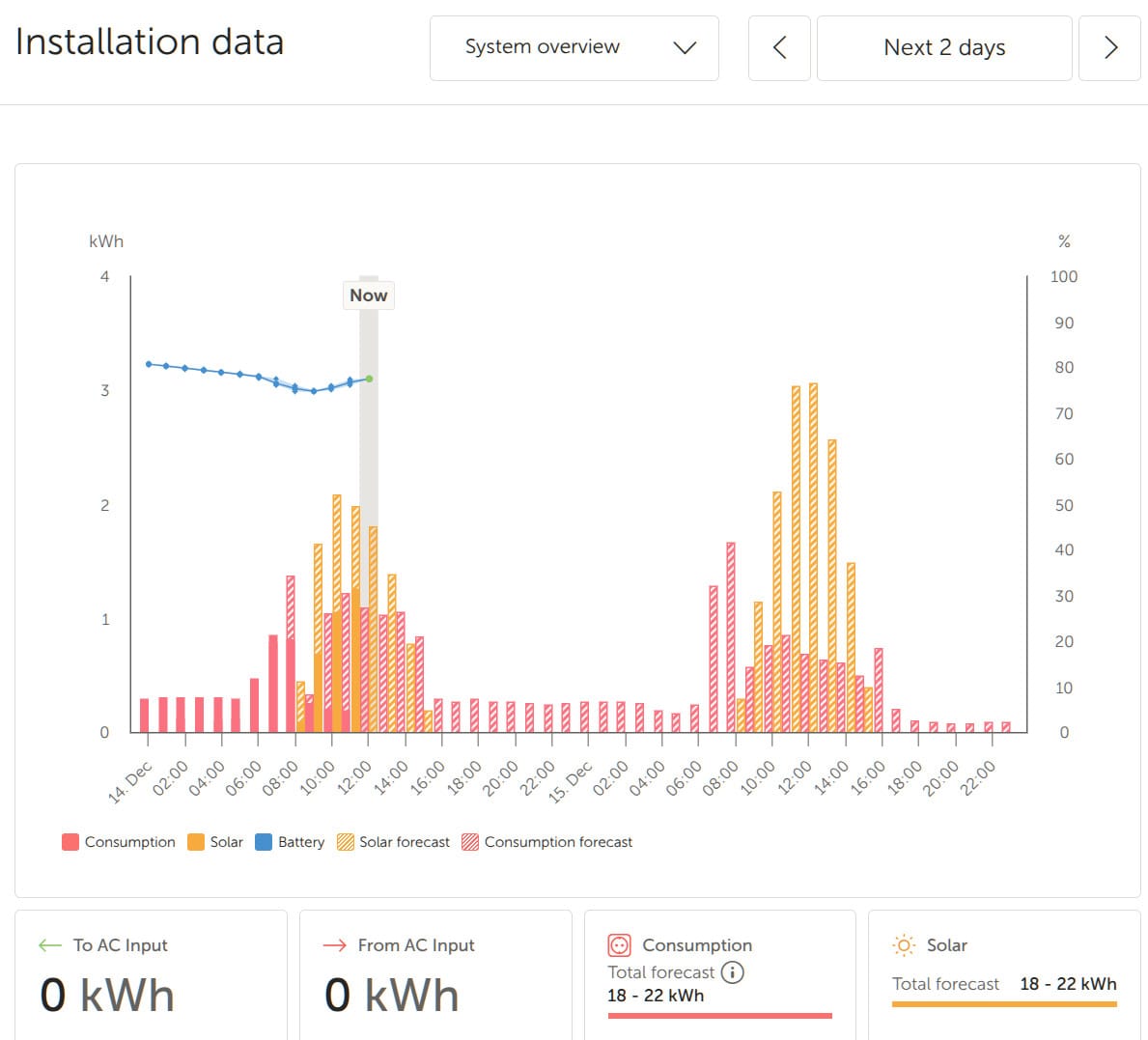
Reactive systems respond to what's happening now. Intelligent systems anticipate what's coming.
Production Forecasting
- Weather integration: Cloud cover, temperature, precipitation predictions
- Panel-specific modeling: Orientation, tilt, shading patterns throughout the day/year
- Historical correlation: Learn how your specific installation performs under various conditions
- Horizon: Useful forecasts need 24-72 hour lookahead minimum
Consumption Forecasting
- Pattern recognition: Weekday vs. weekend, seasonal variations, occupancy patterns
- Event awareness: Scheduled loads (EV charging, water heating), calendar integration
- Anomaly detection: Unusual consumption should trigger alerts, not just be recorded
2. Optimization: Making the Right Decisions
With forecasts in hand, the system must decide: What should happen and when?
Multi-Objective Optimization
Energy decisions rarely have a single "best" answer. The system must balance competing goals:
| Objective | Trade-off |
|---|---|
| Minimize cost | May increase grid dependency |
| Maximize autarky | May waste potential export revenue |
| Maximize battery lifespan | May leave capacity unused |
| Minimize grid impact | May not optimize for household economics |
Users should be able to set priorities, and the system should optimize accordingly—not just follow static rules.
Constraint Handling
- Battery limits: SoC boundaries, charge/discharge rate limits, temperature constraints
- Grid limits: Export caps, peak demand charges, time-of-use restrictions
- Device constraints: Minimum run times, startup delays, power ranges
3. Control: Executing the Plan
Optimization means nothing without the ability to act.
Device Integration
- Inverter control: Charge/discharge commands, export limiting, mode switching
- Load management: Deferrable loads (dishwasher, washing machine, pool pump)
- EV charging: Dynamic power adjustment based on solar availability
- Thermal loads: Heat pumps, water heaters, HVAC—often the largest flexible loads
Protocol Support
Real-world installations use a zoo of protocols:
- Modbus TCP/RTU
- CAN bus (for battery BMS)
- SunSpec
- Vendor APIs (VRM, Fronius Solar API, etc.)
- Smart home protocols (MQTT, Zigbee, Z-Wave)
4. Resilience: When Things Go Wrong
Energy systems must keep running when communications fail.
Graceful Degradation
- Local autonomy: Core functions must work without cloud connectivity
- Fallback strategies: Safe defaults when forecasts unavailable
- Watchdog functions: Detect and recover from component failures
Edge Cases
- Grid outage handling (island mode coordination)
- Generator integration and automatic start
- Battery protection during extreme conditions
5. Observability: Understanding What Happened
You can't improve what you can't measure.
Data Requirements
- High resolution: 1-second data for power flows, minute-level for analysis
- Long retention: Years of history for trend analysis and system sizing decisions
- Derived metrics: Self-consumption rate, autarky, efficiency calculations
Visualization
- Real-time dashboard with energy flows
- Historical analysis tools
- Forecast accuracy tracking
- Cost/savings reporting
6. Multi-Site Capability
Many energy system owners have multiple installations:
- Home + vacation property
- Residential + commercial
- Fleet management for installers
A proper energy management system should handle this natively, not as an afterthought.
The Gap
Compare these requirements against what current smart home platforms offer out of the box. The gap is substantial. Home Assistant can do many of these things—with enough custom development. But that's the point: energy management shouldn't require you to become a software developer.
This is why we built WHIP.
Next Up
In Part 4, we introduce WHIP—our approach to energy management that addresses these requirements from the ground up. → Introducing WHIP