
SELV-DALI: Light Without the Grid

A case study from our flagship installation
The Horror Movie Paradox
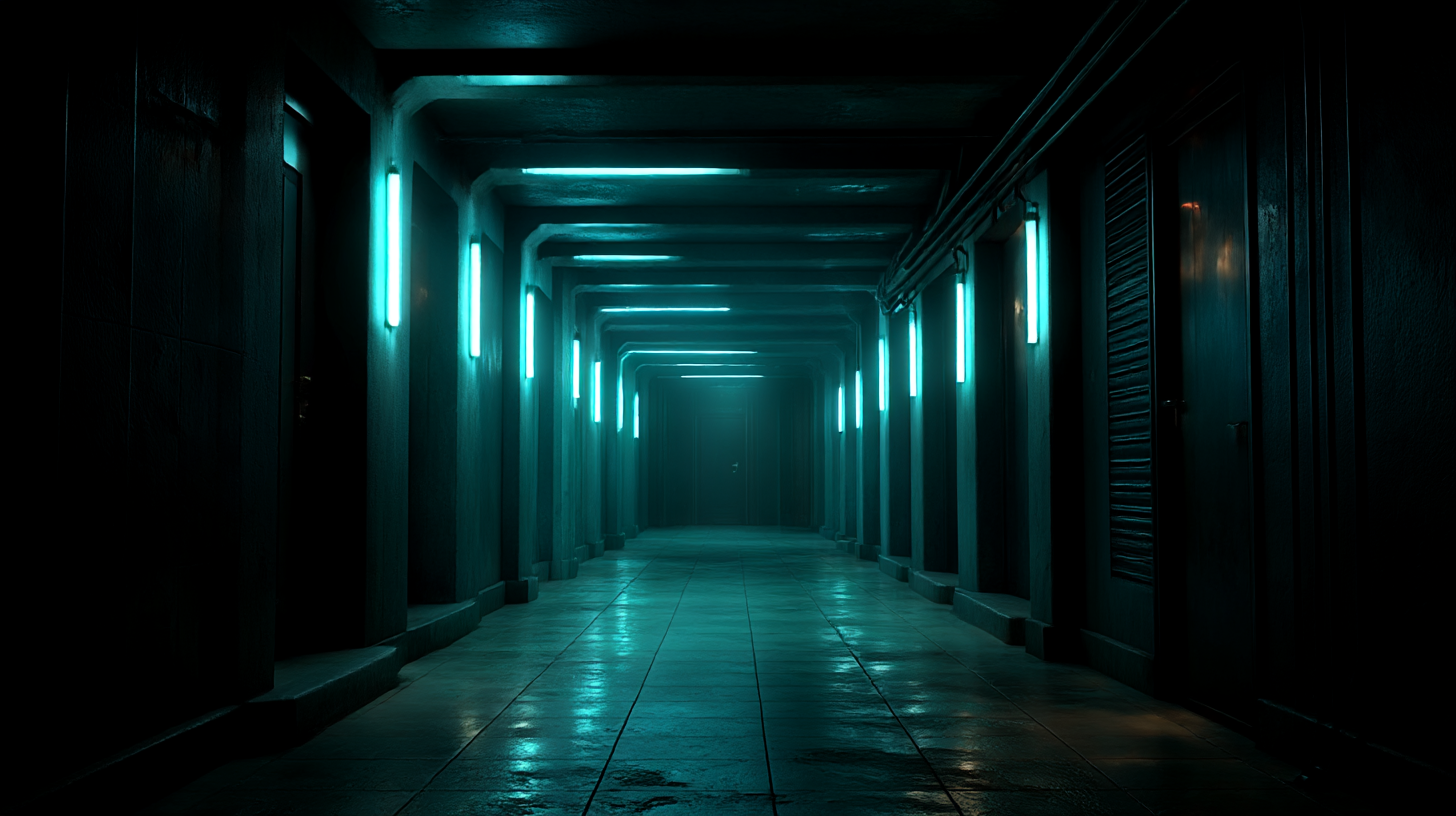
It's the year 2247. A space station at the edge of the known universe. The protagonist creeps through a corridor. The lights flicker ominously. Something evil approaches...
And I'm sitting on the couch thinking: Really? In the 23rd century they still don't have proper electrical installations?
Since completing our flagship installation, I can't take horror movies seriously anymore. Because when our power grid fails, something strange happens: Nothing.
The lights don't flicker. They don't go out. They simply keep burning as if nothing happened. Welcome to the world of SELV-DALI.
Why DALI Isn't SELV (Even Though It Looks Like It)
DALI (Digital Addressable Lighting Interface) is the industry standard for professional lighting control. The control line operates at 9.5 V to 22.5 V DC - typically 16 V at idle. That sounds like low voltage, like safety, like SELV.
But DALI is not SELV.
The reason lies not in the control line itself, but in the connected devices. A typical DALI LED driver looks like this:
230V AC ──── LED Driver ──── LED
                 │
            DALI Bus (16V)
The problem: The LED driver contains 230 V mains voltage internally. A single insulation failure - a punctured capacitor, a damaged winding - and suddenly there's 230 V on the DALI bus.
That's why DALI is officially classified as FELV (Functional Extra Low Voltage), not as SELV (Safety Extra Low Voltage). The difference isn't academic - it has massive implications for installation and safety.
The Light Switch Next to the Sink
Imagine you're planning a bathroom. Where can switches go?
With 230 V AC, strict zones apply:
- Zone 0 (inside the tub/shower): No switches
- Zone 1 (above tub/shower): No switches
- Zone 2 (60 cm around Zone 1): Only with splash protection IP X4
- Zone 3 (additional 240 cm): Normal installation possible
This means: The light switch must be far from water. Impractical, but safe.
With SELV, everything changes.
Safety extra-low voltage under 60 V DC is considered touch-safe - even with wet hands. Zone restrictions fall away. A switch right next to the sink? No problem. In the shower's splash zone? Technically possible.
But to achieve SELV, having a 16 V bus isn't enough. The entire chain must be galvanically isolated from mains.
The SELV-DALI Architecture
In our flagship installation, we implemented this consistently:
Battery Storage (48V nom.)
        │
        ▼
   DC/DC Converter
        │
        ▼
    24V DC Bus ────┬──── LED Luminaires (24V)
                   │
                   └──── DALI Power Supply
                              │
                              ▼
                      DALI Bus (16V)
No 230 V AC anywhere in the entire lighting chain.
The battery storage operates at nominal 48 V - corresponding to a typical LiFePO4 system with 16 cells in series. Even at full charge, the voltage stays below 60 V, within SELV range.
A high-quality DC/DC converter generates stable 24 V for the LED bus. This 24 V powers both the LED luminaires directly and a specialized DALI power supply that generates the 16 V control bus.
The result: True SELV from battery to photon.
Why 24 Volts?
The choice of 24 V as intermediate voltage isn't coincidental:
Better than 12 V:
- Half the current at the same power
- Thinner conductors, lower losses
- Longer cable runs possible
Availability:
- 24 V is an industrial standard
- Wide selection of LED luminaires, strips, and drivers
- Components are affordable and available
Below battery voltage:
- Direct operation from the 48 V battery storage isn't possible for LED components
- Practically no luminaires available for this voltage range
The Uncanny Valley Experience
The first real test came unplanned. A firmware update for the inverter required a restart. I shut down the system.
The 230 V supply to the house went off. The refrigerator fell silent. The coffee maker showed no time.
But the light? Kept burning.
It's a strange feeling. You expect darkness, mentally prepare for it - and then... nothing happens. The brain needs a moment to process that the expectation was wrong.
We call it the "uncanny valley" of electrical installation. Technically perfect, but emotionally disconcerting because it contradicts our instincts.
After a while, you get used to it. And then you can't take horror movies that use flickering lights as a stylistic device seriously anymore.
Safety Through Simplicity
SELV-DALI offers more than comfort during power outages. It fundamentally increases installation safety:
No electric shock risk:
- Even with damaged cables or defective devices
- No dangerous voltages that could be touched
- Safe for children and pets too
Simplified installation:
- No zone restrictions in wet areas
- Switches can be placed where they're practical
- Fewer regulations, fewer sources of error
Fire protection:
- Lower currents at the same power (compared to 12 V)
- No arc flash risk with short circuits under 60 V
- Thermally less critical installation
Integration with Battery Storage
SELV-DALI only makes sense when battery storage is present. But for houses with photovoltaics and storage, it's a natural extension.
The storage is already there. The 48 V is available. A DC/DC converter and DALI power supply are manageable additional costs - especially compared to a UPS system for all lighting.
The result is a system that:
- Benefits from PV surplus during sunny weather
- Continues seamlessly during grid outages
- Has no switching time (there's nothing to switch)
- Achieves the highest safety class for lighting
Summary
SELV-DALI is more than a technical gimmick. It's the consistent implementation of two principles:
- Safety through low voltage: Below 60 V DC there's no electric shock risk. Period.
- Resilience through independence: What doesn't depend on the grid can't be disrupted by the grid.
In our flagship installation, we've proven this is practically achievable. The components exist. The technology works. And yes - the feeling when nothing happens during a power outage is fascinating every single time.
Perhaps sci-fi movie screenwriters should stop by our place. In 2247, the lights really shouldn't be flickering anymore.
This article is part of our case study series about the WHIP flagship installation. More articles: [DC Network: The Control Paradox]
Technical Specifications:
- Battery storage: 48 V nominal (LiFePO4)
- Intermediate voltage: 24 V DC
- Control: DALI-2
- Maximum voltage in system: <60 V (SELV compliant)