
From Power Plant to Smart Home: Why Energy Independence Demands Intelligence

The Inevitable Journey
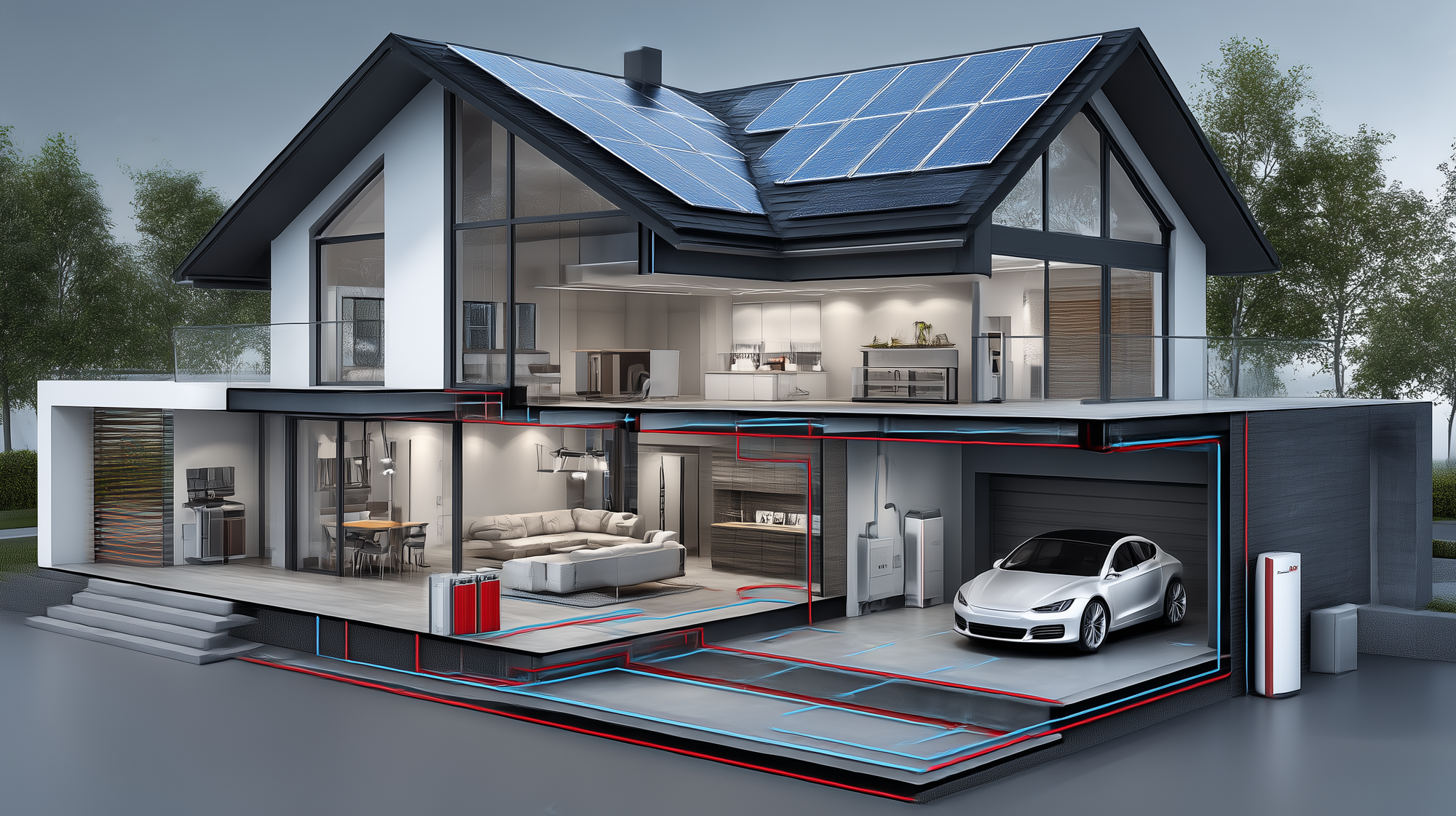
You installed solar panels. Then came the battery. Suddenly, you're not just a homeowner—you're running a private power plant. And like any power plant operator, you quickly discover that generation is only half the equation. The other half? Intelligent management.
This article explores why every serious PV/battery system owner eventually finds themselves in the world of smart home technology—not for voice-controlled lights or automated blinds, but for something far more fundamental: energy sovereignty.
The Problem with "Dumb" Energy
A traditional home treats electricity like water from a tap—always available, price constant, origin irrelevant. But that "constant price" assumption is already crumbling: dynamic tariffs from providers like Tibber, aWATTar, or Octopus Energy mean prices can swing wildly hour by hour. Even without your own generation, intelligent consumption timing suddenly matters.
And the moment you generate your own power, everything changes even more:
- When you use energy suddenly matters (sunny midday vs. cloudy evening)
- Where the energy comes from matters (your battery, your panels, or the grid)
- What you power matters (can the washing machine wait for solar surplus?)
- How much you store vs. use vs. export matters
Without intelligence, you're flying blind. Your expensive battery might charge from the grid at night only to sit full while midday solar goes to waste. Your heat pump might kick in precisely when clouds roll over. Your EV might gulp grid power while your panels beg for load.
From Monitoring to Control
Most PV owners start with monitoring—watching the pretty graphs of production and consumption. It's satisfying, but passive. The next step is inevitable: "What if the system could react automatically?"
This is where smart home technology enters—not as a luxury, but as a necessity for anyone serious about:
- Maximizing self-consumption
- Minimizing grid dependency
- Optimizing battery longevity
- Reducing energy costs
- Achieving true energy resilience
What This Series Covers
This is the first article in our Smart Home Energy Management series. We'll explore:
- The Landscape — Existing smart home platforms and their energy management capabilities
- The Requirements — What real energy management actually demands (spoiler: it's more than most platforms offer)
- The Solution — Introducing WHIP, our approach to energy management done right
Whether you're running a small balcony system or a multi-site installation, the principles remain the same. Energy independence isn't just about hardware—it's about the intelligence that ties it all together.
Next Up
In the next article, we survey the smart home landscape: Home Assistant, OpenHAB, ioBroker, and proprietary solutions. What do they do well? Where do they fall short for serious energy management? [Link to Article 2]