
Autarky, Robustness and Resilience – Three Pillars of Future-Proof Housing

Why Think About This at All?
Recent years have shown that supply infrastructures are more vulnerable than assumed. Large-scale power outages, gas supply shortages, overloaded grids. These are no longer hypothetical scenarios but documented events. Anyone planning or renovating a house today faces a fundamental question: How dependent do I want to be on systems I cannot control?
The answer does not lie in a single technology – not in the photovoltaic system, not in the battery storage, not in the well. It lies in understanding three concepts that form the foundation of a truly future-proof house: autarky, robustness, and resilience.
Autarky – The Ability to Self-Supply
Autarky describes independence from external supply systems. An autarkic house can meet its demand for electricity, heat, and water from its own sources.
The degree of autarky is not a binary value but a spectrum. Complete autarky – the house as a closed system without any external connection – is technically possible but rarely sensible. More relevant is the question: In which areas and for how long do I want to be self-sufficient?
Example electricity: A photovoltaic system with battery storage can easily cover 100% of demand in summer. In winter, the calculation looks different. Anyone who wants to be self-sufficient then needs either significant oversizing or a backup generator – both with their own trade-offs.
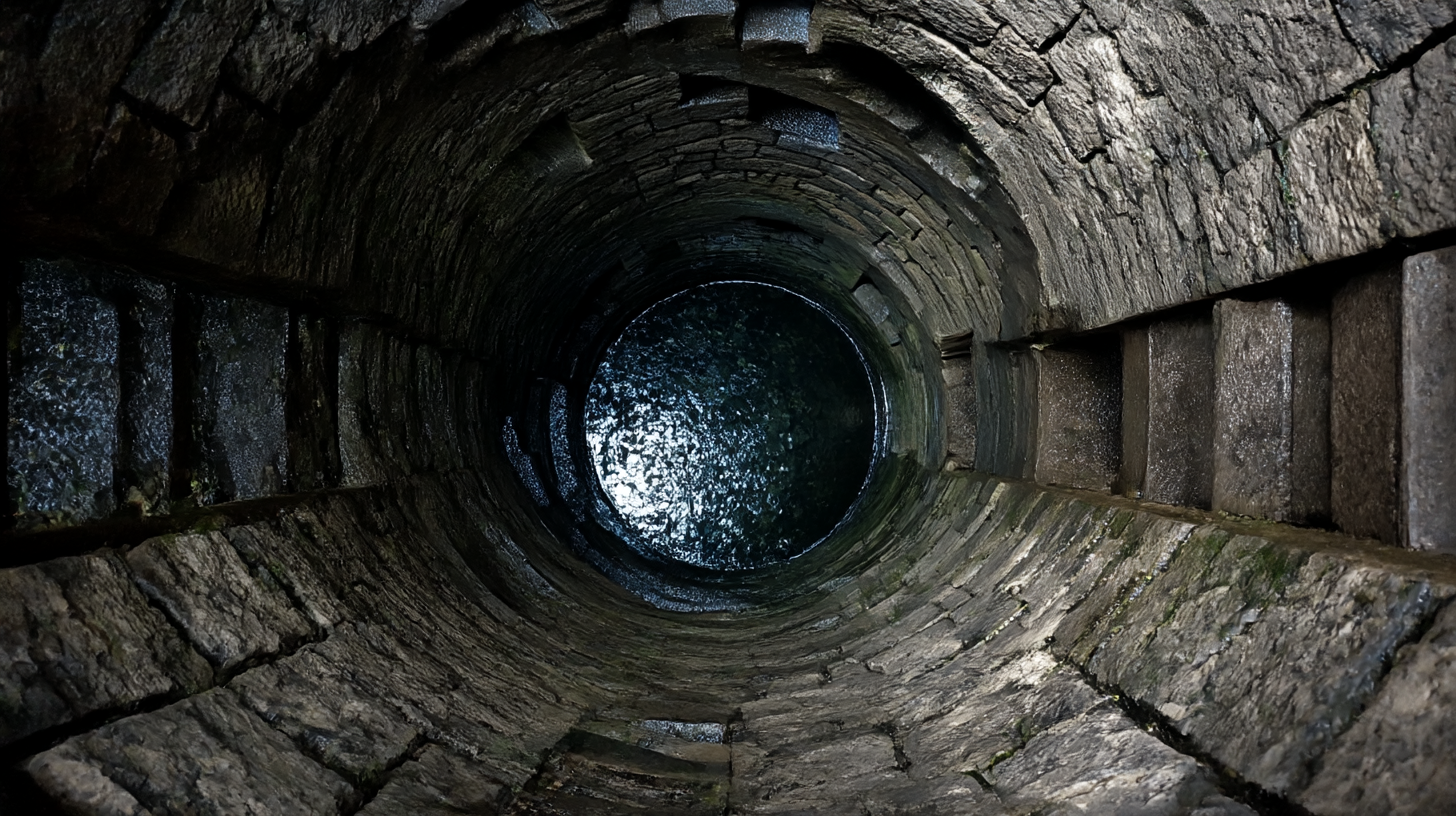
Example water: Your own well provides independence from the municipal network. But it requires permits, regular water quality testing, and a pump that in turn needs electricity.
Autarky is not an end in itself. It is a tool for risk minimization – and like any tool, it must be used deliberately.
Robustness – Resistance to Disruption
A robust system withstands stress without losing its function. It is the rock in the surf, the wall that withstands the storm.
In construction, robustness means: designing components and systems so that they continue to function under adverse conditions. This applies to both physical and technical aspects.
Physical robustness: A well-insulated building envelope with high thermal mass maintains interior temperature within an acceptable range for days even without active heating. This is passive robustness – it requires no energy and no control.
Technical robustness: An inverter that continues to work during grid failure (island-capable) is more robust than one that shuts down when the grid signal is missing. A wired bus system is more robust than WiFi-based home automation.
The core of robustness is the question: What happens when condition X occurs? And the honest answer to that before X occurs.
Resilience – The Ability to Recover
While robustness describes how a system withstands disruptions, resilience describes how it recovers from disruptions. The flexible reed that bends in the storm and then straightens up again.
A resilient house accepts that disruptions will occur – and is prepared to restore normal operation. Ideally automatically, without manual intervention.
Example: A power outage occurs. The resilient house:
- Automatically detects the outage
- Switches to island mode
- Prioritizes critical loads (refrigerator, heating pump, communication)
- Shuts down or reduces non-critical loads
- Automatically returns to normal operation when grid power returns
This requires more than just hardware – it requires intelligence. A set of rules that recognizes states and makes decisions. This is precisely where home automation becomes a critical element.
The Interplay
The three concepts are not independent of each other. They condition and reinforce each other – or they undermine each other when one is missing.
Autarky without robustness is fragile. A photovoltaic system makes you independent from the power grid – until the inverter fails. Then you have a 20 kWp self-sufficient system on the roof that delivers not a single watt.
Autarky without resilience is rigid. A system that knows only one operating mode fails when conditions change. What happens when the battery storage is full and the sun keeps shining? What happens when there is a defect in the house electrical system?
Resilience without autarky has limits. A house can react to disruptions ever so cleverly – if it depends entirely on external suppliers, the ability to recover is tied to their availability.
The goal is a system that integrates all three properties: independent enough to bridge outages; robust enough to function under stress; resilient enough to adapt to changed conditions.
The Fractal Principle
A crucial point: These three concepts apply not only at the level of the entire building. They repeat – almost fractally – at every level of abstraction:
| Functional Level | Autarky | Robustness | Resilience |
|---|---|---|---|
| Building | Own energy sources, well | Thermal mass, passive cooling | Switch to emergency operation |
| System | Island capability | Oversizing, quality components | Automatic reconfiguration |
| Software | Local logic, no cloud dependency | Input validation, watchdogs | Exception handling, restart capability |
| Component | Local intelligence in actuator | Industrial quality, protection classes | Self-diagnosis, fallback modes |
This also means: If one level violates these principles, weak points emerge that propagate upward. The most robust building envelope is useless if the heating controller crashes on a software error and does not recover.
Anyone who wants a truly resilient house must think through the entire chain – from brick to code.
The Tools
How do you achieve autarky, robustness, and resilience in practice? Three principles are central:
Redundancy means implementing critical functions multiple times. Not one heating system but two independent heat sources – for example, a heat pump and a wood stove with water jacket. Not one communication connection but fiber optic and LTE backup. Redundancy costs money and space. It is insurance whose value only becomes apparent when damage occurs.
Layered architecture means designing systems so that failures in higher layers do not bring down those below. The cloud fails? The local system continues working. Home automation crashes? Lighting and heating remain manually operable. Each layer must remain functional even without the layers above it – albeit with reduced comfort.
Graceful degradation means that a system does not fail completely during partial outages but reduces its performance step by step. Better a house with reduced lighting than a house without power. Better 18 °C room temperature than a failed heating system. This requires prioritization: Which functions are critical, which are comfort?
Implications for Planning
Anyone who wants to build an autarkic, robust, and resilient house must set the course early in the planning process. Some questions that are asked too rarely:
How long must the house function without external supply? 4 hours? 4 days? 4 weeks? The answer determines the sizing of storage and backup systems.
What are the critical functions? Not everything is equally important. Refrigerator yes, outdoor lighting no. This hierarchy must be defined and implemented in the control logic.
What dependencies exist between systems? The heat pump needs electricity. The ventilation system needs electricity. The well needs electricity. Without electrical resilience, there is no thermal resilience, no water resilience.
How will the system be tested? Theory is good, practice is better. A controlled test run – disconnect the grid, activate island mode, observe behavior – reveals weaknesses that remain invisible on paper.
Conclusion
Autarky, robustness, and resilience are not luxury concepts for technology enthusiasts. They are rational risk management in a world whose infrastructures are under increasing pressure. A house that embodies these principles is not only prepared for crisis situations – it is more efficient in daily operation, more independent, and more economical in the long term.
The question is not whether you should engage with these concepts. The question is how deep you want to dive.